
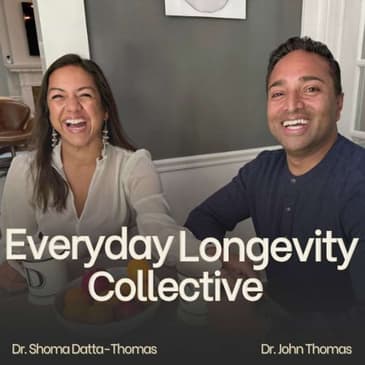
Welcome to the Everyday Longevity Collective! In this episode, hosts Dr. Datta-Thomas and Dr. Thomas dive deep into the powerful role of movement across every decade of life, from building the foundation of bone density and muscle in your teens and 20s, to maintaining independence and strength well into your 70s and beyond. They break down the latest research, real-life patient stories, and expert strategies tailored to women and men at each life stage, including the impact of hormones like estrogen and testosterone, how to combat metabolic decline, and why resistance training is truly non-negotiable.
Whether you’re an athlete, a busy professional, or just want to age with energy and confidence, Dr. Datta-Thomas and Dr. Thomas offer actionable roadmaps to integrate movement into your daily routine and your family culture. You’ll get practical tips on training at every age, from injury prevention in youth and postpartum recovery to staying strong through menopause and supporting longevity in your elder years. Plus, they share their own family’s approach to making movement a multigenerational tradition that celebrates strength, health, and self-worth.
Tune in for empowering advice and clear action steps you can use, starting today, to harness the “medicine” of movement for lifelong vitality.
Timestamps:
00:00 "Bone Health & Cycle Syncing"
04:19 Adolescent Training: Girls' ACL Focus
09:42 "Testosterone, Aging, and Health"
10:42 "Hormones, Aging, and Resistance Training"
16:19 "Midlife Health: Exercise & Hormones"
18:30 Optimizing Health Through Movement
22:31 Aging Health: Prevention Through Strength
25:25 "Family Fitness and Fun"
28:06 "Healthy Habits and Social Growth"
33:32 "Resistance Training for Hormonal Health"
35:47 "Steps, Mobility, Training, Recovery"
37:42 Movement Meets Metabolic Optimization
Movement for Longevity: Insights from the Everyday Longevity Collective Podcast
Are you curious about how movement can transform your health at every stage of life? The Everyday Longevity Collective podcast, hosted by Dr. Datta-Thomas and Dr. Thomas, offers expert insights on integrating movement into your routine for optimal metabolic, hormonal, and skeletal health. In this recap, we distill key takeaways from their episode, highlighting actionable tips for each decade of life and the power of movement as the foundation for longevity.
The Importance of Foundational Years: Teens to Twenties
According to Dr. Datta-Thomas, the bone density built between ages 12 and 30 determines fracture risk later in life. This unique life stage is marked by peak hormone output and maximum metabolic capacity. For young women, rising estrogen levels influence musculoskeletal changes, including hip structure and ligament laxity. Engaging in high-impact, weight-bearing activities during adolescence and young adulthood can significantly increase bone mineral density with benefits that last for decades. For adolescent males, peak testosterone supports muscle growth and bone mineralization. However, it is important to balance rapid muscular gains with connective tissue adaptation. Both hosts emphasize that mastering movement patterns before progressing to heavy loading is essential for injury prevention and long-term health.
Building Decades: Thirties and Forties
As we enter our thirties and forties, physiological changes begin to shift the way we should approach training. Dr. Thomas explains that for men, gradual testosterone decline makes it harder to build muscle and recover fully. Heavy compound resistance exercises two to four times weekly are crucial, supplemented with mobility work to prevent overuse injuries.
For women, hormonal transitions such as perimenopause, pregnancy, or postpartum changes require a strong focus on core stability, pelvic floor integration, and hip strength. Dr. Datta-Thomas highlights that resistance training at this stage is vital for defending against muscle loss and metabolic decline. Cardio is integrated through both high-intensity efforts and steady-state activities, promoting cardiovascular and fat metabolism health.
Critical Intervention: Fifties and Sixties
Movement is not optional in your fifties and sixties. This is the time when cardiovascular disease risk increases and hormonal shifts, especially menopause, create what Dr. Datta-Thomas calls a "metabolic cliff." For women, estrogen reduction affects bone, heart, and brain health. Consistent resistance training and functional movements, such as squats and loaded carries, help maintain bone mineral density, strength, and balance.
Men deal with continued testosterone decline and are at higher risk for joint injuries. Controlled strength work, mobility, and single-leg balance become priorities for injury prevention and maintaining functional independence. Both hosts underscore the synergy between movement, hormone optimization, and advanced metabolic interventions for thriving in these decades.
Longevity Years: Seventies and Beyond
Independence becomes the goal as we age past seventy. Dr. Thomas stresses that resistance training twice a week can significantly improve strength and metabolic health, helping both men and women maintain autonomy. For women, osteoporosis and fall prevention are paramount, with sit-to-stand exercises, step-ups, loaded carries, and balance training recommended. For men, resistance work counters sarcopenia or severe muscle loss, which otherwise reduces independence.
Even if you start resistance training later in life, research shows that muscle and strength can still be gained. Lifestyle interventions, including advanced metabolic support like hormone testing and peptide therapy, help sustain vitality and quality of life.
Building a Culture of Movement Across Generations
Movement is fundamental, not only for individuals but for families. Dr. Datta-Thomas and Dr. Thomas share how their family incorporates active routines, making exercise enjoyable and social. Multi-generational activities, from weekend walks to intramural sports leagues, foster habits that boost self-confidence, resilience, and health at any age.
Celebrate effort and persistence over perfection, and remember, the journey to longevity starts with small, consistent steps.
Action Steps for Every Age
No matter your decade, prioritize mastering movement, integrating resistance and balance training, and adapting your approach as you age. Aim for 7,000 to 10,000 steps daily and regularly include mobility and flexibility work. Remember, it is never too late to start improving your health through movement.
For more guidance, listen to the Everyday Longevity Collective podcast and empower yourself to thrive at every stage of life. For a detailed breakdown and actionable tips, revisit the episode timestamps in this recap for expert advice.
Show's Website - https://everydaylongevity.co/
Dr. Shoma Datta-Thomas LinkedIn - https://www.linkedin.com/in/shomadattamd/
Podcast Partner - TopHealth - https://tophealth.care/
“Disclaimer: Informational only. Not medical advice. Consult your doctor for guidance.”
The bone density you build between the ages of 12 to 30 are actually what determine your fracture risk at 60s or 70s. So you never get that window back.
SPEAKER_00If you cannot control body weight movement patterns, you are not ready for heavy loading. So you want to master the movement first, then progressively load it. So strengthen your 70s is not about aesthetics, it's about autonomy.
SPEAKER_01The research does show for even 70s and 80s, even starting resistance training at this phase can still build muscle, improve our strength and overall metabolic health. So wherever you are, make it day one and not one day.
SPEAKER_00Hi, and I'm Dr. John Thomas, sports rehab-focused chiropractor and functional movement specialist with over 20 years in chiropractic and sports rehabilitation. I've trained everyone from high school and college athletes to adults in their 70s and 80s who want to stay strong and independent.
SPEAKER_01Today we're covering the entire spectrum of movement, from training youth athletes to maintaining strength and independence all the way through your 70s and beyond. We'll show you how movement influences metabolism, hormones, bone health, and whole body function at every life stage.
SPEAKER_00And movement is woven into our family culture through weekend workouts, intramural leagues, and multi-generational sports. So we're going to show you how this works across every age and every stage of life. So let's dive in.
SPEAKER_01So let's start with our foundational years, teenagers through our 20s. So from a hormonal and metabolic perspective, this is a very unique stage. This is the decade of peak hormone output and maximum metabolic potential. But there are critical sex differences that influence how we approach movement, training, and even nutrition. For young women, obviously adolescents through the 20s, once puberty begins, estrogen rises dramatically. And this brings on profound change, even in our musculoskeletal structure. So really critical for movement, hip width, changes in the center of gravity, and most important for athletes, change in ligament laxity. But estrogen also does something for long-term health. It drives our peak bone mineral density. The bone density you build between the ages of 12 to 30 are actually what determine your fracture risk at 60s or 70s. So you never get that window back. We saw in the journal of bone metabolism that tracked adolescents through young adulthood and found high impact weight-bearing activities during this particular period did significantly increase peak bone mineral density with benefits persisting throughout decades. So the potentially dangerous female athlete triad of low energy, menstrual dysfunction, and low bone density is a real concern that can set up fracture risk for life. Of course, this is also the time we're establishing menstrual health patterns. So cycle sinking has been something pretty popular, typically because women tend to feel in the follicular phase, so day one to 14, stronger, more of the motivation. And in the luteal phase, day 15 to 28, needing more recovery. But really, for me, my guidance is rather than rigid programming around your cycle, just track how you feel and adjust intensity as needed. So we're prioritizing again, as we've been saying, consistency over perfection. For adolescent males through the 20s, testosterone really is at peak levels, also. So muscle growth, rapid gains, aggressive bone mineralization is all happening. Growth hormone is abundant, insulin sensitivity is very high, and recovery is extraordinary. And I think a lot of us can remember those good old days. But this is a maximum muscle building capacity window as well. But there is a mismatch. So muscle strength increases rapidly with testosterone on our metabolic peak, but connective tissue adaptation can lag behind. So how do you account for that mismatch in your training programs?
SPEAKER_00After 25 years of working with young athletes, we know that the training should look different for boys and girls during adolescence. Not because one is stronger than the other, but because the injury risk and hormonal changes are different. Let's start with the female athletes. Once puberty begins and estrogen increases, female athletes experience change in pelvic structure, ligament laxity, and neuromuscular control. That combination is one of the reasons ACL injuries occur up to four to six times more often in female athletes compared to males. So for girls in their teens, a huge priority is in neuromuscular control and landing mechanics. That means training hip stability, loot strength, hamstring strength, single leg control, and deceleration mechanics. So their ability to slow down with control, right? Slow down from high speed. A large part of ACL prevention programs like FIFA 11 Plus and PEP protocols are built around exactly these patterns. So I'll give you an example. I worked with a 16-year-old volleyball player who had chronic knee pain. When we looked at her movement, every jump landing went straight into her knees caving. We spent six weeks retraining her landing mechanics, strengthening her glutes and her hamstrings, and improving her hip control. We retested and her knee pain resolved, and she was able to jump with more power and control. So that's kind of the key takeaways from progressing and individualizing that type of training for both females and males at that age. So for male athletes, the injury profile is different. Boys in their teens often gain strength rapidly as testosterone rises, but the connected tissue doesn't always adapt as fast as the muscle. So we often see hip flexor strains, hamstring strains, patellar tendon irritation or patellatendinitis, low back overload primarily from poor-like hinge mechanics, and lack of flexibility. So for boys, the focus is often posterior chain development, so all the muscles on the back of the body, tissue lengthening, mobility, and movement control under load. So that means we're going to be doing similar in that we're going to be doing hip hinging, deadlift pattern development, hip flexor and quad flexibility, hamstring strength, and core stabilization. So for both male and female athletes, the rule stays the same. If you cannot control body weight movement patterns, you are not ready for heavy loading. So you want to master the movement first, then progressively load it. This is the window to build metabolic flexibility, establish healthy eating patterns, maximize bone density, and create movement competency. The foundation built now determines metabolic health, skeletal health, and injury resilience for decades. So in the building years, which is like your 30s to your 40s, this is the decade where we really start to see the divergence between male and female training needs. So men and women can absolutely train similarly, but the physiology underneath begins to change. So for men in their 30s and 40s, testosterone begins to gradually decline. So muscle mass becomes harder to maintain and recovery slows. The training emphasis for men becomes maintaining lean muscle mass, preserving joint integrity, and managing cumulative load. So the most effective strategy here is heavy compound resistive training for two to four times per week. And this includes squat patterns, hinges, pressing, pulling exercises, and loaded carries, which are farmers carries or things like that where you're strengthening your grip. These movements stimulate testosterone, growth hormone, and insulin sensitivity. But men also need to watch for overuse injuries at this age, particularly with shoulder impingement, low back strain, and elbow tendinopathy. A lot of golfers and tennis elbow at this stage, so which usually come from too much volume and poor mobility. So mixing in that active flexibility between strenuous exercise and strenuous activity is key. Now, for women in their 30s and 40s, the physiology is different. Many women are dealing with pregnancy or postpartum changes, pelvic floor stress, hormonal fluctuations, increased ligament laxity. So for women in this decade, we focus heavily on core stability, pelvic floor integration, glute strength, and hip stability. One of the most common things I see clinically is pelvic instability after pregnancy. So after that laxity, after you've given birth, all those ligaments and your hips have stretched, but you have to take the time to actually allow those ligaments to creep and allow those muscles to help stabilize those hips. So for example, I have a 38-year-old runner who came in with recurring hip pain after her second child. The underlying issue wasn't the hip joint, it was actually the pelvic stabilization and core coordination. So once we rebuilt those patterns, her running pain resolved. So for women in this decade, strength training is still critical. But the focus becomes stability first and then loading second.
SPEAKER_01And this is truly a decade where a lot of metabolic and hormonal declines are starting to become more measurable. So the early intervention at this age is really matters, and movement is a critical part of getting ahead of the game. So for the men in their 30s and 40s, this is when we're starting to see testosterone levels can decline 1% to 2% per year after age 30. So by the 40s, there can really be a significant decline in that testosterone level. Testosterone, now remember, it's metabolically protective. It goes beyond just muscle mass and sexual function. So it really supports insulin sensitivity, our heart health, our brain health, reduces visceral fat, and maintains bone density. So as it drops, we're losing the protective effect in all of those areas. And here's what's critical about movement the resistance training can increase testosterone pretty significantly, even with natural aging. So when we combine that with the other pillars, adequate sleep, stress management, proper nutrition, many men can maintain healthy natural levels through the 40s. But we do have to pay attention and track here. When lifestyle optimization isn't enough, this is where we try to test early and often, and we can think through if testosterone replacement combined with all of that focus on movement and resistance training, as we've spoken, if combined, they can really help protect our metabolic health, muscle mass, and overall quality of life. For women in this decade, this may be a time when perimenopause is starting. And that really often goes unexpected and unrecognized. Testosterone is typically what starts declining, even in the early 30s, I would even say sometimes late 20s through the 30s. And then we next see progesterone typically declining and estrogen then really wildly fluctuating. So this is when we most see either a slow or really severe, depending on the individual, feeling of the hot flashes, night sweats, mood swings, the change in weight, especially building up around the midsection, even if that wasn't the typical body composition, and worsening insulin sensitivity and cholesterol profile. So estrogen for women is very metabolically protective. And as we're losing that with natural aging, metabolic disease risk increases. So this is where resistance training will come in. Again, we've spoken about how movement and resistance training can really help build our lean mass to bring all of those glucose transporters to the top of the muscle cells. And this is your defense against muscle loss, bone density decline, metabolic dysfunction. With significant perimenopause symptoms, bioidentical or general hormone replacement can be very transformative. And we know when combined with movement as a priority, this can be really synergistic. For pregnancy and postpartum, as we alluded to, the abdominal wall and pelvic floor are really stretched, ligaments are loosened, but metabolically speaking, this is also a time when significant insulin resistance can increase. So I call pregnancy a pressure test on our cardiovascular system, on the heart, and what and on our insulin resistance. So this is a time when gestational diabetes may develop. That woman who's had gestational diabetes during pregnancy, even if it resolves, has a 40 to 50% increased risk for a lifetime to develop diabetes. It's a really important thing to keep in mind because even after pregnancy and postpartum, you want to be planning against that development. So you can have obviously nutritional optimization, but this is where movement is a really great preventive tool again. The 30s and 40s are really starting with very small hormonal changes and metabolic changes, but using movement and a focus on especially resistance training can really offset the metabolic decline. Where do you typically bring in cardio work or aerobic activity for your 30 to 40-year-old patients?
SPEAKER_00So typically for this group, the cardiovascular training for this age group changes. So instead of working at zone five as much, we're trying to get that in at least once a week, where you're testing your threshold and you're really pushing yourself once a week, the majority of the time, which is two to three times a week, you're really working in zone two, which is about 70-75% of your cardiorespiratory range. You're able to, again, have a conversation while you're doing cardio, but you're not gasping for air. So in that way, again, you're getting cardiovascular benefits, you're getting fat metabolism and burning, but you're not stressing your heart so much, you're really building more conditioning at this stage. In your 50s and 60s, training becomes about preserving functional capacity. So again, men and women experience this stage differently. For women, menopause dramatically reduces estrogen levels. And estrogen plays a large role in bone density, tendon elasticity, muscle recovery. And once estrogen declines, the risk increases for osteoporosis, tendon injuries, muscle loss. So strength training is a key component to protecting and preventing these injuries. The most important exercises for women in these decades are squat. You want to load your spine, load your hips. These are the key areas that tend to demineralize. We also measure when we do our bone density, doing deadlifts, things to help strengthen the spine and core. So as we do these pelvic force strengthening exercises, exercises like this will incorporate that and you want that key strength. Step ups as well, same thing. All these things we're going to be keep in mind, keeping your core engaged and loaded carries. So this would again be our farmer's walks, things like that, where we're again engaging our core in a movement pattern. These provide the mechanical loading necessary to maintain bone density, and single-leg training becomes critical for fall prevention. I have a 59-year-old patient with early osteopenia. She had never lifted weights. And within 18 months of progressive resistance training, twice per week, her bone density improved measurably. Now, for men in their 50s and 60s, the major issue becomes joint degeneration and muscle loss. So testosterone continues to decline, like you mentioned, but many men still train like they were in their 30s. So that's when injuries happen. The most common injuries I see in men in these decades are rotator cuff injuries, lumbar disc irritation, knee degeneration. So the emphasis shifts to strength with control tempo. So not doing everything with speed and explosiveness. You still have that as part of your program, but it's not the key component. A mobility maintenance. So now we're incorporating mobility throughout our workout and post for recovery. And then joint stability, right? So we're focusing on our joint positioning with good posture when we're doing these lifts. We're highly focused on form for good function. Heavy lifting can still be done, but it must be programmed intelligently with proper recovery weeks.
SPEAKER_01So we've definitely been seeing the trend and a lot of discussion around, especially women wearing weighted vests on walks and runs. Where does that fit into the picture for this decade of life?
SPEAKER_00So if you have proper gait mechanics and you're not having any hip or low back issues, any ankle or lower joint issues, then I think that's a good component. It's a way of loading your spine and loading your core while you're walking or loading. This will add manage stress to your tissues and bones to add bone density. But again, the key is having proper gait mechanics, making sure you're keeping a nice strong posture when you're walking. You don't have rounded shoulders and you don't have any pre-existing hip, back, or knee issues.
SPEAKER_01From a longevity medicine perspective on movement in the 50s and 60s, this is when we really focus a lot on cardiovascular disease and actually have started prevention hopefully years before this. But cardiovascular disease really becomes the leading cause of death for both men and women in this decade. But this is where resistance training combined with moderate aerobic activity weekly can reduce heart disease significantly, even reported up to 30, 40%. So this is not optional, which we keep saying over and over again. It's really a key component to your health maintenance. And it is the most powerful intervention for preventing heart attacks, strokes, maintaining the vascular health that determines your lifespan that's available at your fingertips every day. For women, now we know at the average age of 51 is when we see menopause is starting. So one year without a period. And estrogen and progesterone obviously have dropped dramatically. And we also see it's not gradual, it's often a metabolic cliff. When estrogen crashes, it affects several areas: bone health, metabolic health, cardiovascular health, body composition, and also very importantly, brain health, noted by brain fog, memory issues, but also now we're having a rising acknowledgement of the link between estrogen decline and Alzheimer's risk. So again, the movement intervention is imperative. Resistance training two to three times a week, even is really something that we would love to be standard. Research showing resistance training for 18 months did increase bone mineral density in spine and hips in the Lyftmore study. And there are others that support this in both males and females. But for many women and men, well, movement alone may not be enough, although it is the absolute core pillar when we think about what we can do on an everyday basis and empower ourselves. In this particular category, we can add things like hormone replacement that can dramatically improve metabolic health in combination with a good movement program, especially for women initiated within 10 years of menopause. For men, we know this is a period, as we've been mentioning, testosterone continued decline and potential for metabolic dysfunction to continue to advance. Most commonly, our guys come in just really feeling a change in energy, a lack of gains or progress in the gym, not being able to keep up with their daily energy requirements, and not being able to engage in the way that they want, either professionally, personally, or even intimately, and movement can really help offset that. The other advanced interventions in this decade that I use in combination with the foundation of a good movement program is regular testing. So metabolic panels, even every six months, especially tracking fasting insulin, inflammatory markers, cardiometabolics, and catching these patterns and changes early. DEXA scans around body composition really mean much more to us than a number on a scale in pounds or kilograms. Growth hormone peptides can be a great tool when done with medical guidance with a medical professional. So things like CJC 1295 with epimorin. In these ways, we have a lot of tools through peptides, which are just signaling molecules, to support muscle maintenance, sleep quality, enhance recovery from by promoting natural growth hormone production. This is also an area where low-dose GLP category has entered in combination with the insulin sensitivity improvement that movement is giving us, we can also compound that benefit with this category of medication as well, which really can translate into cardiovascular and metabolic health. So the 50s and 60s are when movement continues to be important, but it's strategic as maybe a part of a program with other hormone optimization or other monitoring interventions that lifestyle alone may not achieve.
SPEAKER_00So in what we consider the longevity years, which would be 70 plus, this time your goals shift from performance to independence. But again, there are important differences between men and women. For women over 70, the biggest risk is osteoporosis and falls. So the most important exercises that we focus on here are sit-to-stand patterns. So again, we strengthen that loading without using your hands, your ability to get up from a chair, step-ups, again, teaching them proper form and how to properly load while maintaining your core, loaded carries and balance training. Even something as simple as holding a single leg stance for 10 seconds daily can dramatically reduce fall risk. So for men over 70, the primary issue becomes sarcopenia or severe muscle loss. Without intervention, many men lose up to 30% of their muscle mass by this age. That's why resistance training remains critical. Two sessions per week is the minimum, can significantly improve strength and metabolic health. So I had a 76-year-old patient who couldn't get off the floor without some type of aid or some type of assistance. So we break down his movement and we figure out where the weaknesses are and where the mobility challenges are. We take six weeks to focus on strengthening those movements, increasing mobility, and creating power from the floor. Within that period of time, we see measured gains and their ability not only to move up from the floor, but do it with stability. The key here is this determines whether someone stays independent or needs assisted care. So strengthen your 70s is not about aesthetics, it's about autonomy.
SPEAKER_01And how do you give guidance around aerobic activity or what people would call cardio in this decade?
SPEAKER_00So during this decade, again, we want to get at least two days a week of good progressive loading to mean bone density, to challenge your balance. But when it comes to cardiovascular training, what you want to do is again, you're gonna lower. Your rate of perceived exertion, right? So you're not looking for this optimal level of heart rate. But what you want to do is be able to challenge your heart, be able to recover quickly so that you're able to handle stress when you need. So we'll do a steady state, a zone two type cardio, things that'll get them elevated to 110 or 120 maximum of their heart rate, and they're able to recover rapidly within a minute. And their ability to recover will definitely affect their ability to handle challenges through their daily life.
SPEAKER_01Absolutely. Our 70s are about preserving function and preventing decline. By the 70s, hormone production has declined substantially, of course, for both sexes, but movement still remains a very important intervention. For women, as we talked about, the postmenopausal osteoporotic fracture risk really has become epidemic. And we see that one in two women over 60 will fracture a bone. The sorcopenia or muscle loss accelerates, and our average 75-year-old woman has lost 40% of peak muscle mass. So metabolic dysfunction may even become practically universal. Diabetes, cardiovascular disease, insulin resistance, but we know that really big commitment to resistance training can maintain muscle mass that looks younger, bone density that is more solid, and can really offset that. For men in the 70s, again, metabolically testosterone in terms of sex hormone is profoundly low. And this is expected, but it can contribute to severe muscle loss, cognitive decline, and even reduce vitality. So the insulin sensitivity, the metabolic dysfunction, all of them really have a chance to really skyrocket in these decades. So for men, we can look for the symptoms, but also this is really a metabolic preventive health issue. And resistance training, cardiovascular training, and aerobic training can lead us to improve the long-term quality of life in this decade. For advanced interventions again, this time we can still really count on continuing to test early and often, continuing to use additional peptides, possibly even hormone therapy. And we often will bring in advanced interventions in this decade. We can continue oftentimes as long as there are no contraindications that have developed. Great support again with hormone therapy, although the risk-benefit ratio has to really be thought out a little bit more at this age based on foundational health. Peptides, hormones, all of them can be continued. Comprehensive metabolic management is still very critical. So testing, continuing to test often and managing markers aggressively, and continuing other practices again, like movement, nutrition, maybe even bringing in supplements as needed for deficiencies and continue these best practices. But again, foundation really does center on movement. And without that training stimulus, none of the other interventions would work. The research does show or even 70s and 80s, even starting resistance training at this phase can still build muscle, improve our strength, and overall metabolic health. So it's really never too late.
SPEAKER_00So let's talk about family integration and our movement culture. So for us, movement is medicine. For us, movement is health. For us, it integrates into everything we do on a daily basis. How movement actually integrates into our family over multiple generations and people in different stages of life? How would you say this works in our family?
SPEAKER_01Well, as you said, it really has become our family culture, not something separate from family time. So weekend workouts are a big part of this. Our Saturday mornings, I think I've mentioned before, are our pancakes, but it also usually will move into family movement time. So again, for our younger girls, the Saturday morning may bring time for bodyweight exercises, playing, jumping, really more physical activity. And our older girls will join in when they're home and might join. And then it may look like pickleball or something a little bit more structured. So it's all happening together, which is the fun part. And we can just adjust for levels of movement depending on who's around. But we talk about it also. The vocabulary is very critical here. I think, especially since we have four daughters, especially across different ages. And when we discuss it, we really always emphasize how movement makes us feel strong, healthy, good in our body. And it's a real sense of personal accomplishment, acknowledging the effort somebody put into this and the persistence they showed, not just about results in the end.
SPEAKER_00It's interesting, especially with like when we listen to our girls describe themselves. A lot of times they describe themselves as strong or as an athlete or someone who's capable of doing things like lots of push-ups or pull-ups and things like that. And the fact that they get their self-confidence from things like that really gives us obviously a big sense of joy, but also means a lot for their confidence going forward and through life, right? They're creating these good habits that they can take along all through their life.
SPEAKER_01And our eight-year-old had beat out all the boys in her push-up competition at school, and it was major news, but you could just see it really just gave her a big boost in how she was feeling, not only about movement, but about herself.
SPEAKER_00Right, exactly. When we talk about exercise, it's never about exercise, it's never about punishment or compensation for eating. We talk about it as building strength, building capacity, feeling good in your body. And when one of our daughters mentions like feeling strong, like she did in her push-up competition or after a workout, we reinforce that. When they talk about enjoying movement or feeling accomplished after gymnastics or being able to do handstands for long times, we celebrate that. The focus is always on what their body can do and not what it looks like. One daughter might be proud that she held a plank for a minute, while another might be excited that she was able to deadlift a new personal record. We celebrate both equally and we make the importance about working hard, persevering through things that are difficult, and creating new goals for yourself so that you're always working towards better physical capacity and building your self-worth through strength and health.
SPEAKER_01And for both of the older girls, I think we also see this as a huge part of their social life. So going to classes with friends and doing brunch after, making it something fun that's a part of a shared interest with friends, especially promoting healthy habits for each other, has been really great to see that this is something that they've chosen to continue as adults. Also for our daughter in the military, training with her friends really more to enhance their professional life as military members has been really important. We know that a lot of that foundation started in very early days. So it's great to see them extend that and making those decisions for themselves. But we also try to model balance. So rest days, modifying if something is hurt or an injury. So again, modeling consistency over the years and not perfection.
SPEAKER_00Right. Especially like you mentioned, our daughter in the military, the creating the good habits that she did at a young age made things like in challenges that she went through, even in the military and basic training, that much more doable and gave her the confidence to overcome a lot of those because doing things physically did not become a mental strain for her. When we talk about multi-generational movement, this is huge for us. So we have a lot of generations within our family. My dad's in his 90s, your mom's in her 80s, our little ones are six and eight, and our middle kids, and including ourselves, we kind of span the whole spectrum there. So we have family spanning four generations, grandparents in their 90s down to our youngest who's six. Movement is what connects everyone. So we'll do walks together, hikes, all these things are things that we can participate together, but everyone can do it at their own pace. So we take active vacations where things like skiing, again, we can be together, but people can go at their own comfort level, but we're together. Weekend gatherings often include movements like playing catch or shooting hoops, going for a walk. It's woven into how we spend time together as a family.
SPEAKER_01We've also seen, as especially for your family over the years, the intramural leagues are a great example of this. Do you want to share what you have done as a family in this regard?
SPEAKER_00Sure. As a family, and luckily we're blessed to come from a very large family who enjoys sports. So we do these intramural leagues where siblings, cousins, and extended family will come together and we'll field full teams and we'll challenge ourselves to participate and compete against others. It's a great way to spend time together and be active. We play everything from volleyball, basketball, flag football. We field these full family teams. This creates connection across generations while everyone stays active. The kids see the grandparents, parents, and older siblings all participating together.
SPEAKER_01I would also vote for intramurals as a great way to keep movement in life once you're past maybe college where it's structured and you can sign up for team sports. I also had the same experience after residency. I realized I didn't really have a connection to sports anymore. And again, got really involved and actually now, you know, those are some of my closest friends. And it was a really great way to keep movement together and social and fun, and has really been an opportunity to continue to do it as an adult where sometimes the opportunities are lacking.
SPEAKER_00So even like with moments like that, we really celebrate showing up for each other, especially when it's hard. So when one of our kids mentions she didn't feel like working out, but did it anyway, we acknowledge that. The language is always about what they have accomplished through their own effort. You worked really hard on that. You stuck with it even when it was tough. Uh, this builds the mindset that health is built through small, consistent actions, through showing up even when you don't feel like it, through persistence over time. That's the mindset that creates lifelong movement practices.
SPEAKER_01Now that we've reviewed each decade and how it's worked for us across generations, let's give everyone clear action steps based on where they are right now. So, to start, someone in their teens or 20s, really quickly, what should they focus on?
SPEAKER_00The key here is you want to master movement patterns. So quality over intensity is definitely the key. For young women, prioritize landing mechanics and hip stability to prevent ACL injuries. For young men, develop posterior chain strength, hamstring, glutes, low back control.
SPEAKER_01Hormonally, again, this is the window to build peak bone density through weight-bearing exercise. So squats, deadlifts, jumps. This will determine and set you up for decreased fracture risk well through your 70s.
SPEAKER_00But what about for you? What about in your 30s and 40s?
SPEAKER_01So again, a key resistance training two to four times a week is non-negotiable. This is really the defense against muscle loss, metabolic decline. And we're starting to see now what looking out for signs of perimenopause, just to know that this may be something that happens pretty early. For men, maintaining testosterone again through movement is really important here. Strength training, sleep, stress management, keeping an eye again through careful monitoring.
SPEAKER_00In your 30s and 40s, remember to focus on form over intense loading. So you want to continue to increase load and get stronger, but you really want to maintain form. As we get older in these ages, our posture changes. So we want to make sure we're maintaining good posture, good mechanics within our hips and our joints, and good mobility. You also want to make sure that you're maintaining and working on continuous cardiovascular conditioning. So more zone two exercises. And again, this can be vigorous walks, this can be hiking, this can be stairs, all those things that are going to build your cardiorespiratory conditioning.
SPEAKER_01Metabolically speaking, of course, the resistance training is really important because this is the time of a lot of transition and starting decline in the sex hormones. So perimenopause, changes in testosterone for men. But again, we know movement can really offset those changes and help decrease metabolic risk that can come with it. The quick things to keep in mind for the 50s and 60s is that this is the critical intervention decade. For women, menopause can be a metabolic cliff. Resistance training can help reverse that and preserve the bone density, muscle mass, metabolic health. For men, again, also considering the weight does strength training can maintain the metabolic health. And this may be a time when you want to have conversations around hormone replacement or additional interventions. Again, body composition is really important here over the number on a scale.
SPEAKER_00And balance training becomes critical here. Balance training reduces fall risk by 40%. And single leg work, like single leg deadlifts, Bulgarian split squats, single leg stands, these aren't optional anymore. You really have to focus on your single leg balance. All of this fall prevention, you'll be thanking yourself in the later decades for that.
SPEAKER_01And speaking of 70s and beyond, what are the quick things to keep in mind?
SPEAKER_00So try to get at least two strong strength sessions in per week. This will help maintain muscle mass that looks 20 years younger than everyone else who is not doing it. So make sure you get that in consistently. You'll feel the difference on a day-to-day basis with all your activities.
SPEAKER_01And it's never too late to start. Adults in the 70s and 80s can continue to build muscle, improve function. So wherever you are, make it day one and not one day.
SPEAKER_00Functional movement patterns are the most important during these decades, right? So you want to focus on sit to stand, being able to get up from a seated position without using your hands, and just work on that from different heights. If you have to start off with a higher seat depth, start there and then work your way lower. Getting off the floor, being able to carry your groceries and then again with strong posture, again, that grip strength really makes a difference in mortality as you age and preventing that fall risk. Continue to work those 10-second cycles of single leg balance.
SPEAKER_01So what is the universal framework that really is applicable for anybody across all ages?
SPEAKER_00So I know this is starting to sound repetitive, but seven to 10,000 steps a minimum, right? Make sure you're getting those in and find that movement per day. You're getting cardiovascular benefits, you're getting impact and bone benefits, you're getting metabolic benefits. This is also a good way to when you could focus on clearing your brain and other mental focuses. Plus 10 to 15 minutes of mobility work, targeting your hips, your thoracic spine, and your shoulder positioning and mobility. So you also want to consider resistance training two to four times per week, depending on your age and capacity, of course. Focus on six fundamental patterns that we continue to reinforce here, right? Squatting, hinging, so hinging from the hips, pushing, pulling, carrying, and then your core strength. Progressive overload every two to four weeks, and then remember to focus on your recovery. All the muscle recovery, all of the healing happens while you're sleeping. So seven to nine hours nightly, take a recovery week every three to four weeks, and then reduce the volume by about 30%. Active recovery days with walking, swimming, or stretching will really make a difference in your progression.
SPEAKER_01And then how can you apply this to family life? And this has been a really great aspect for us, but making movement multi-generational. So family walks, active vacations, inner mural leaks together, and then reinforce it with positive language, strong, healthy, feeling good in your body, celebrating efforts and persistence and not just results. And of course, keeping in the mix balance. So rest days, modifications, and sustainability over perfection.
SPEAKER_00And then when we think about people when they should seek advanced help, if you're doing the basics consistently but still struggling with energy or body composition or metabolic markers, get comprehensive metabolic and hormone panels. Work with professionals who understand the interplay between movement, hormones, metabolism, and advanced interventions.
SPEAKER_01And in clinical practice, the way movement comes in is in partnership with hormonal and metabolic optimization. So comprehensive testing from biomarker testing, possible hormone replacement where appropriate, metabolic interventions, perhaps select peptides, and of course tracking body composition alongside all of your good work that you're doing with your movement.
SPEAKER_00So in my practice, I work with people of all ages, young athletes building foundations, professionals maintaining performance, older adults preserving independence. The focus is functional movement, correcting movement patterns, injury prevention, and sustainable progressions. So movement is the foundation.
SPEAKER_01Hormones amplify what movement creates.
SPEAKER_00Advanced interventions enhance what hormones and movement together are building. Stay consistent, stay strong, movement is medicine at every age.