
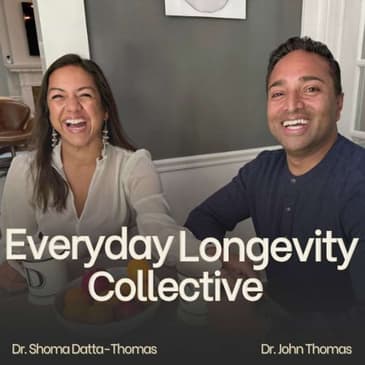
Welcome back to EVERYDAY Longevity Collective! In today’s episode, Dr. John Thomas and Dr. Shoma Datta-Thomas dive into one of the most overlooked but essential pillars of healthy aging: cardiorespiratory fitness. They reveal how your body ages at the speed of your conditioning, not your years, and why modern lifestyles secretly accelerate deconditioning. Forget old notions of cardio as punishment; true conditioning is about building energy, flexibility, resilience, and independence through every decade of life. Whether you're navigating your 20s, managing midlife stress, or aiming for lifelong mobility, the hosts break down the latest research, practical strategies, and actionable routines that go beyond aesthetics to support real functional health and longevity. Get ready for a thoughtful guide to optimizing your fitness capacity at any age!
Timestamps:
00:00 Cardiorespiratory fitness importance
05:09 Peak fitness in your 20s
06:55 Finding the right workout balance
12:18 Health checkups in 30s and 40s
14:58 Understanding Zone 2 training
16:43 Importance of varied workout routines
21:04 Importance of fitness in aging
23:10 Practical longevity fitness routine
The Real Key to Longevity: Insights from the Everyday Longevity Collective Podcast
Are you curious about what truly drives a long, healthy, and active life? The latest episode of the Everyday Longevity Collective, featuring Dr. John Thomas and Dr. Datta-Thomas, provides a science-backed and practical roadmap for building lasting health at every age. Let’s explore the highlights, key takeaways, and expert advice from their conversation, empowering you to put longevity principles into practice.
Why Cardiorespiratory Fitness Matters More Than You Think
One of the episode’s main messages is that your body ages at the speed of your conditioning. According to Dr. John Thomas, modern lifestyles tend to destroy conditioning with chronic stress, sedentary habits, and sporadic workouts. Many people believe feeling tired is just a natural part of getting older, but as Dr. Datta-Thomas points out, most people are actually experiencing deconditioning rather than aging.
Cardiorespiratory fitness, often measured by VO2 max, is emerging as one of the strongest predictors of overall health and longevity. High cardiorespiratory fitness can substantially reduce the risk of cardiovascular disease, metabolic disorders, frailty, and even premature death.
Conditioning Beats Weight: The Overlooked Health Metric
Forget obsessing over the number on the scale. Dr. Datta-Thomas emphasizes that fitness capacity matters far more than aesthetics, and research shows that people who are “fit but fat” often have better health outcomes than those who are skinny but deconditioned.
New science consistently points out that obsessive focus on weight is outdated. Instead, focus on how capable your body feels, your ability to recover, and how you can perform everyday activities with energy.
Tailoring Fitness Through the Decades
In their decade-by-decade breakdown, the hosts explain how your cardiorespiratory fitness changes at various life stages and how to adapt for maximum longevity.
- 20s: This is your physiological peak. Build your aerobic base, train efficiently, and develop solid recovery habits. Avoid the pitfalls of underfuelling and excessive HIIT workouts, especially for young women.
- 30s: With careers and family taking center stage, fitness often falls by the wayside. Dr. John Thomas recommends incorporating exercise "snacks" or short, efficient sessions throughout the day and prioritizing regular movement to avoid the "weekend warrior" trap.
- 40s: This decade brings hormonal changes, sleep disruptions, and potential fat redistribution. Conditioning becomes tightly linked to energy, body composition, and cognitive resilience. Integrate strength training and zone two cardio to maintain muscle and metabolic health.
- 50s and Beyond: Conditioning is crucial for independence, resilience, and functional freedom. Maintain your ability to travel, play with grandchildren, and recover from illness. Movement in any form supports vitality regardless of age, and it’s never too late to improve.
Practical Tips for Building Longevity Conditioning
Rather than punishment or endless exhaustion, conditioning should be about building an aerobic engine that keeps you energetic and resilient. The podcast offers a weekly foundation for sustainable results:
- Aim for 150 to 300 minutes of aerobic movement weekly.
- Prioritize two to four resistance training sessions.
- Walk daily, breaking it up into short or long sessions.
- Incorporate one or two higher-intensity sessions if appropriate.
- Don’t forget mobility and balance practices.
A key tip involves zone two training, such as incline walking at a sustained conversational pace. This approach improves mitochondrial efficiency, fat burning, and foundational health without excessive strain.
The Bottom Line: Move for Health, Not Just Looks
The longevity conversation is rapidly shifting away from aesthetics and toward capacity. Being able to move well, recover, handle stress, and stay physically independent is the new definition of real health. Dr. John Thomas and Dr. Datta-Thomas both strongly encourage incremental progress and smart, enjoyable movement as the path to lifelong vitality.
Ready to future-proof your health at any age? Consistent conditioning is your best investment in energy, confidence, and independence for years to come.
Show's Website - https://everydaylongevity.co/
Dr. Shoma Datta-Thomas LinkedIn - https://www.linkedin.com/in/shomadattamd/
Dr. John Thomas LinkedIn - https://www.linkedin.com/in/john-thomas-8543426/
Podcast Partner - TopHealth - https://tophealth.care/
“Disclaimer: Informational only. Not medical advice. Consult your doctor for guidance.”