
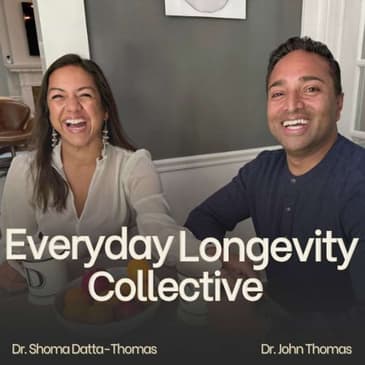
Welcome back to the Everyday Longevity Collective! Today, we’re diving deep into the intersection of performance, injury prevention, and long-term health, unpacking the critical role that strength, body composition, and load tolerance play as we age. Many assume that getting older means inevitable loss of strength and flexibility, but Dr. Datta-Thomas and Dr. Thomas are here to challenge that belief. They’ll take you decade by decade, outlining how to optimize training in your 20s all the way to your 70s and beyond, highlighting what changes, what matters most, and how you can stay strong, independent, and resilient throughout every stage of life. Whether you’re looking to futureproof your fitness or better understand the science behind muscle, metabolic health, and functional movement, this episode will arm you with actionable strategies to live fully, no matter your age.
Timestamps:
00:00 Importance of muscle strength
05:33 Staying active in your 20s
07:30 Balancing workouts and protein intake
10:19 Understanding menopause and muscle loss
14:40 Adjusting workouts for men over 50
17:50 Importance of exercise for health
20:02 Longevity fitness and training tips
23:07 Importance of resistance training
Strength, Body Composition, and Longevity: Key Insights from Everyday Longevity Collective
Looking for practical, science-backed strategies to thrive through every decade of life? The Everyday Longevity Collective podcast, featuring Dr. John Thomas and Dr. Shoma Datta-Thomas, delivers a wealth of advice on how strength and muscle health impact long-term wellness. This episode is packed with actionable tips on maintaining physical capacity, building reserves, and balancing life’s demands as we age. Below, you'll find a summary of their key points and recommendations, tailored to help readers of all backgrounds optimize their routines for longevity and function.
Challenging the Myths of Aging
Many people believe that getting older automatically means becoming weaker, less flexible, and less capable. Dr. John Thomas points out that while some physiologic changes do occur over time, a significant portion of age-related decline is preventable. Underloading, deconditioning, and poor recovery often result from low muscle mass and a loss of movement competency, not just age. Dr. Datta-Thomas echoes this, stating that aging well is not about looking 25 forever but about keeping the physical capacity to live fully in each decade. The true focus should be on strength, body composition, and what the hosts call load tolerance.
Understanding Strength, Body Composition, and Load Tolerance
The podcast defines strength as more than just how much you can lift. It involves your capacity to create, control, and absorb force. Power, or how quickly you can generate force, becomes especially important as you age. Body composition, according to Dr. Datta-Thomas, refers to the ratio of lean mass to fat mass and how fat is distributed, rather than just body weight. Meanwhile, load tolerance is your body’s ability to handle stress, whether from workouts, daily activities, or unexpected physical demands.
Decade-by-Decade Guidance for Optimal Health
The episode breaks down the evolving needs and strategies for each decade of life. In your 20s, focus on building muscle mass, tendon capacity, movement quality, and high aerobic capacity. Dr. John Thomas cautions against mistaking activity for targeted strength development and recommends two to four resistance training sessions per week, a variety of movement patterns, and a high-protein diet.
In your 30s, “life load” starts to compete with training load. Careers, families, and stress can disrupt routines. Both hosts highlight the importance of structured training, protein intake, and regular movement. Dr. Datta-Thomas emphasizes that well-planned progression and pelvic floor recovery are essential for women.
The 40s are described as a turning point. This is when body composition changes, recurrent pain, and lower resilience often appear. The advice shifts toward functional strength and monitoring markers like grip strength, waist circumference, and walking capacity. Women experience notable shifts during perimenopause, with muscle and bone health requiring extra attention.
By the 50s, muscle becomes a metabolic engine critical for glucose use and metabolic health. The hosts urge listeners to prioritize strength training twice or ideally three times a week, focus on balance, maintain adequate protein, and pay attention to recovery. For women, postmenopausal changes mean even higher stakes for maintaining muscle and bone density.
In your 60s and beyond, the emphasis is on practical function. Can you stand up from the floor, carry groceries, or react to a trip? Power and speed are crucial, not just raw strength. The recommendations include lower body strength work, balance training, step-up exercises, carrying, and controlled fast movements.
Individualizing for Men and Women
Men and women both need strength and aerobic work, but their challenges differ. For women, the perimenopause-to-menopause transition brings physiological shifts in fat distribution and bone health. For men, changes are often behavioral, such as declining activity or inconsistent training. Dr. John Thomas notes that structured exercise is especially beneficial for women and can lead to greater reductions in mortality risk.
The Practical Longevity Prescription
If you want to build a routine that supports longevity, the hosts recommend strength training two to four times per week, hitting all major movement patterns, and including aerobic exercise and daily movement. Eat enough protein, monitor grip strength and body composition, and stop judging health solely by the scale. Aim for better movement, better loading, and smart progression to maintain independence and quality of life through every decade.
For more in-depth advice and evidence-based discussions, tune in to the Everyday Longevity Collective, where Dr. John Thomas and Dr. Shoma Datta-Thomas continue to break down the science of aging well.
Show's Website - https://everydaylongevity.co/
Dr. Shoma Datta-Thomas LinkedIn - https://www.linkedin.com/in/shomadattamd/
Podcast Partner - TopHealth - https://tophealth.care/
“Disclaimer: Informational only. Not medical advice. Consult your doctor for guidance.”