
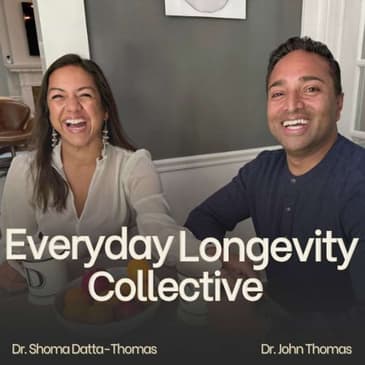
Welcome back to the EVERYDAY Longevity Collective. In today’s episode, Dr. John Thomas and Dr. Shoma Datta-Thomas dive deep into one of the most overlooked pillars of longevity: sleep and recovery. While many of us invest in supplements, intense training, or cutting-edge wellness devices, it turns out you can’t "out-supplement" or "out-train" poor sleep. The doctors break down how sleep isn’t just about feeling rested; it’s the body’s performance engine that influences everything from metabolic health and hormones to brain function and immunity.
Throughout this episode, you’ll learn why consistent, high-quality sleep is essential at every stage of life, how sleep needs and challenges shift by decade and between men and women, and the practical, high-yield strategies for improving your nightly recovery. Whether you’re seeking better athletic performance, sharper cognition, or greater independence as you age, Dr. John Thomas and Dr. Shoma Datta-Thomas offer actionable advice and the latest clinical perspectives on building lasting health starting with your sleep.
Timestamps:
00:00 Importance of sleep for health
05:00 Importance of sleep for metabolism
10:05 Unplugging and managing stress
13:29 Hormone-related sleep disruption in 40s
15:27 Sleep apnea and hormone connection
19:16 Common sleep issues and aging
21:39 Sleep tips for caregivers and gender differences
25:25 Creating a bedtime routine
28:11 Importance of sleep for recovery
Sleep and Recovery: The Foundation of Longevity and Performance
In the latest episodes of Everyday Longevity Collective, Dr. Shoma Datta-Thomas and Dr. John Thomas dive deep into why sleep and recovery are absolutely vital for both longevity and optimal performance. This expert conversation offers a wealth of practical takeaways for anyone seeking to improve health, vitality, and everyday functioning, regardless of age.
Why Sleep is More Than Just Rest
Many people think about sleep simply as a way to feel less tired. However, as Dr. Datta-Thomas explained, sleep operates on a much broader metabolic level. The sleep schedule acts as a metabolic signal that affects almost every system in the body. Dr. Thomas brought home the point that sleep is not just the sidekick to recovery, but the actual recovery system itself. Without quality sleep, even the best workouts and diets cannot deliver the adaptations and results people expect.
The High Stakes of Consistent, Quality Sleep
It may surprise some to learn that sleep has a pronounced impact on cardiovascular health, hormone function, immune strength, brain health, and body composition. Both Dr. Datta-Thomas and Dr. Thomas pointed out that the American Heart Association has included healthy sleep in its Life's Essential 8 for heart health, suggesting that adults should aim for 7 to 9 hours every night. Sleep is not optional or a sign of laziness; rather, it is an essential longevity behavior.
The Importance of Sleep Regularity
While the traditional focus has been on getting enough sleep, the podcast highlights an even more critical factor: sleep regularity. Dr. John Thomas shared that the body thrives on rhythm. Going to bed and waking up at consistent times can predict better heart and cancer outcomes, as found in large biobank studies. Morning light exposure, evening wind down routines, and regular meal and training times all contribute to that rhythmic pattern our bodies need.
How Sleep Needs Evolve by Decade
Sleep and recovery requirements shift through each decade of life. In your 20s, youth can hide the negative effects of poor sleep, but issues like inconsistent body composition, emotional volatility, and lower immune resilience can still surface. By your 30s and 40s, the accumulation of sleep debt becomes more obvious, often mistaken for the natural aging process. The stress and recovery gap widens in the 40s, making intentional recovery strategies even more important.
During the 50s, hormonal changes and menopause in women contribute to sleep challenges and impact cognitive health. For men, symptoms such as fatigue, weight gain, and sleep apnea can be linked to sleep issues rather than just hormone imbalances. In the 60s and beyond, quality sleep becomes crucial for maintaining independence, reducing fall risk, enhancing cognition, and supporting the immune system.
Simple Strategies for Better Sleep
Dr. Datta-Thomas and Dr. Thomas recommend several actionable steps for improved sleep quality:
Aim for 7 to 9 hours per night as adults
Keep wake times consistent to support circadian rhythm
Get morning light exposure to signal sleep and wake cycles
Avoid caffeine eight to ten hours before bed
Limit alcohol, which can fragment sleep
Create a bedtime wind-down ritual including reduced blue light, lower room temperature, and quiet activities like journaling
Address medical sleep disruptors such as sleep apnea and restless legs
Final Takeaways for Longevity
The overarching message from this Everyday Longevity Collective episode is clear. You cannot out-supplement or out-train poor sleep. Recovery is not optional, especially with age. Consistent sleep, rhythm, and intentional stress downshifting are non-negotiable practices for anyone serious about longevity and performance.
If maximized health, sharper cognition, better body composition, and greater independence are important to you, prioritize sleep today and make it foundational to your daily routine. For more expert guidance and actionable longevity insights, be sure to tune in to the full episode with Dr. Datta-Thomas and Dr. Thomas.
Show's Website - https://everydaylongevity.co/
Dr. Shoma Datta-Thomas LinkedIn - https://www.linkedin.com/in/shomadattamd/
Podcast Partner - TopHealth - https://tophealth.care/
“Disclaimer: Informational only. Not medical advice. Consult your doctor for guidance.”